The Archaeology of humour
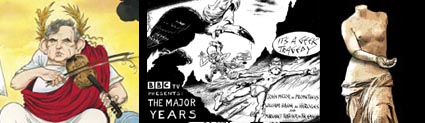
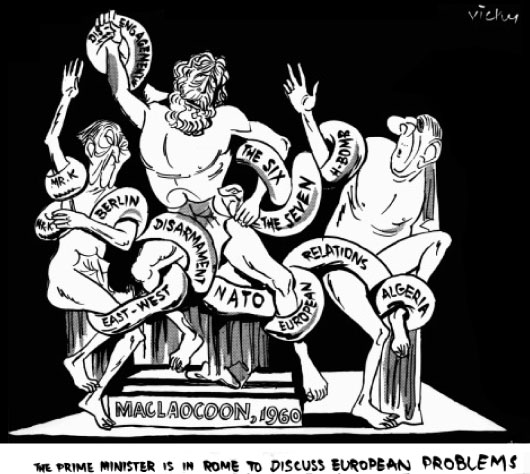 There is much debate, even outside of the "classics world", on who reads classics, whether it is only of interest to the elites of this world, or whether it is useful to non-specialists. There is however a huge and uncharted territory which has been overlooked by most classicists: the world of editorial cartoons. They are very accessible, challenging and mass-produced, in numerous languages and throughout the world. Indeed, what should we make of the many thousands of editorial cartoons in popular and prominent newspapers, propaganda leaflets, from the 19th century to this day, which make classical references, which use (and abuse) Greek and Roman visual myths, events or statesmen, to mock current affairs? Printed newspapers and online papers have grown exponentially in recent years, and their readership has increased not only in numbers but also in popularity, encompassing readers from all social horizons. Newspapers thrive in democracies.
This project, supported by a very large and growing database of political cartoons with classical references, includes mainly publications from most European countries, the USA and Canada, but also some random finds from more "exotic" countries (e.g. Singapore). The many cartoons mocking the ancient world are not considered in this project: only those using the ancient world to comment on current affairs.
There needs to be a move, stronger than
ever to study "popular"; art forms, maybe part of what we call media
today (theatre, films, documentaries, comics, art, visual and verbal
humour, poetics, political rhetoric; new media such as the internet) to
tap in the immense reservoir of references to the classical world and
understand better both our own categories of thought, and our special
relationship with Greek and Roman antiquity.
There is much debate, even outside of the "classics world", on who reads classics, whether it is only of interest to the elites of this world, or whether it is useful to non-specialists. There is however a huge and uncharted territory which has been overlooked by most classicists: the world of editorial cartoons. They are very accessible, challenging and mass-produced, in numerous languages and throughout the world. Indeed, what should we make of the many thousands of editorial cartoons in popular and prominent newspapers, propaganda leaflets, from the 19th century to this day, which make classical references, which use (and abuse) Greek and Roman visual myths, events or statesmen, to mock current affairs? Printed newspapers and online papers have grown exponentially in recent years, and their readership has increased not only in numbers but also in popularity, encompassing readers from all social horizons. Newspapers thrive in democracies.
This project, supported by a very large and growing database of political cartoons with classical references, includes mainly publications from most European countries, the USA and Canada, but also some random finds from more "exotic" countries (e.g. Singapore). The many cartoons mocking the ancient world are not considered in this project: only those using the ancient world to comment on current affairs.
There needs to be a move, stronger than
ever to study "popular"; art forms, maybe part of what we call media
today (theatre, films, documentaries, comics, art, visual and verbal
humour, poetics, political rhetoric; new media such as the internet) to
tap in the immense reservoir of references to the classical world and
understand better both our own categories of thought, and our special
relationship with Greek and Roman antiquity.Research output: a series of articles (In Press; In Preparation); 2 monographs on the topic; 2 conference papers; a database.
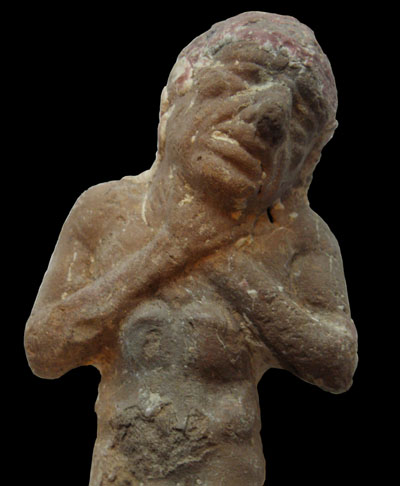 The meaning and function of ancient grotesque terracotta figurines has been debated since the time of Charcot and Regnault, who first "diagnosed" a pathological inspiration in the grotesquely deformed bodies of terracotta statuettes found by the thousands in various archaeological excavations of the Mediterranean and dating from the 3rd century B.C.E. to the 3rd century A.D. Yet the iconography of these grotesque terracotta figurines is extremely complex to pinpoint with any certitude.
There are three main spheres of interpretation: visual humour, theatrical imagery, and specific "portraits" of known pathologies. Their function may have been to amuse, to avert evil, as a memento of comic plays, or even for medical study. These grotesque figurines often lack an archaeological context to be fully understood, which is a little like diagnosing a patient over the telephone.
An interdisciplinary research project between the history of medicine and archaeology. With the collaboration of Prof. L. Lorusso, Clinical
neurologist, in Chiari, Italy and Dr. Celso Zappalà, Obstetrician Gynaecologist, Torino, Italy.
Research output: 2 articles (In Preparation); 1 monograph; 2 conference papers.
The meaning and function of ancient grotesque terracotta figurines has been debated since the time of Charcot and Regnault, who first "diagnosed" a pathological inspiration in the grotesquely deformed bodies of terracotta statuettes found by the thousands in various archaeological excavations of the Mediterranean and dating from the 3rd century B.C.E. to the 3rd century A.D. Yet the iconography of these grotesque terracotta figurines is extremely complex to pinpoint with any certitude.
There are three main spheres of interpretation: visual humour, theatrical imagery, and specific "portraits" of known pathologies. Their function may have been to amuse, to avert evil, as a memento of comic plays, or even for medical study. These grotesque figurines often lack an archaeological context to be fully understood, which is a little like diagnosing a patient over the telephone.
An interdisciplinary research project between the history of medicine and archaeology. With the collaboration of Prof. L. Lorusso, Clinical
neurologist, in Chiari, Italy and Dr. Celso Zappalà, Obstetrician Gynaecologist, Torino, Italy.
Research output: 2 articles (In Preparation); 1 monograph; 2 conference papers.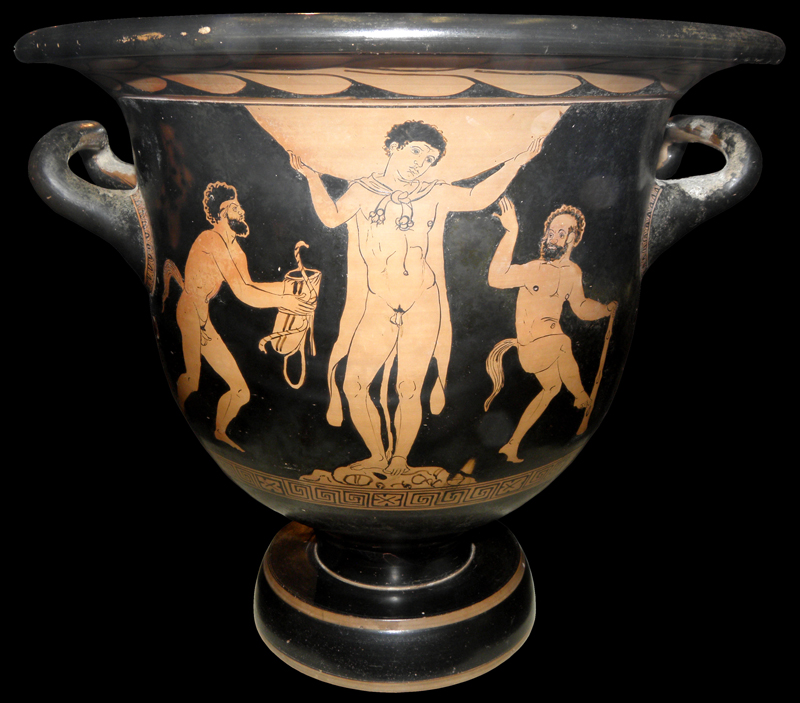 This
project which began in 1999 as a D.Phil focussed largely on comic
images in ancient Greek vase-painting, a relatively neglected subject
at the time. It involved analysing images on over 40.000
Greek
vases stored in over 30 European museums, and carrying out a
reconnaissance survey in and around the Kabirion Sanctuary, Thebes
(Greece). I also carried out a systematic analysis of the entire
Beazley archive and the Corpus Vasorum Antiquorum. I worked at the
Beazley Archive during my D.Phil and for another year and a half as a
full-time researcher for the CVA project. This research resulted in an
extensive database, the foundation of my D.Phil, articles and a
monograph. I drew many vases during that period, including over a
hundred vectorised line-drawings of vase paintings.
This
project which began in 1999 as a D.Phil focussed largely on comic
images in ancient Greek vase-painting, a relatively neglected subject
at the time. It involved analysing images on over 40.000
Greek
vases stored in over 30 European museums, and carrying out a
reconnaissance survey in and around the Kabirion Sanctuary, Thebes
(Greece). I also carried out a systematic analysis of the entire
Beazley archive and the Corpus Vasorum Antiquorum. I worked at the
Beazley Archive during my D.Phil and for another year and a half as a
full-time researcher for the CVA project. This research resulted in an
extensive database, the foundation of my D.Phil, articles and a
monograph. I drew many vases during that period, including over a
hundred vectorised line-drawings of vase paintings.The Research questions focused on identifying visual humour in ancient Greece (mainly Athens and Boeotia), from the 6th to the 4th centuries B.C., through unchanged mechanisms/genres (surprise, parody, caricature, situation comedy); and comparing each comic image to a series of 'usual' or 'serious' representations. The decorated Greek vases are found in the hundreds of thousands, and depict minute details of everyday life and mythology. They also mock many aspects of social and political life, as well as the religious and the mythological spheres; they offer a humorous perspective on popular subjects such as women, foreigners, workers, peasants, poliadic and Dionysian cult (in Attica but also in Boeotia: a chapter of Mitchell In Press 2009 concerns the Kabirion Sanctuary near Thebes) and democracy. The study enabled me to establish certain patterns within painters' workshops, where certain painters seem to almost specialise in comic scenes. A principal contention was that the products were relatively cheap to produce and purchase, and that because they were made by artisans for the market rather than for a patron, they exhibited a freedom of expression which was lacking in most other patronised art forms of the 6th to the 4th centuries B.C. Just as Aristophanic comedies provide insights into general trends in Greek culture -- to win democratically at the yearly dramatic competitions a playwright had to offer something to please most citizens -- Greek vases were aimed at universal appeal, or in other words, at being purchased! Humour was a powerful marketing tool in ancient Athens just as it is today in modern advertising .On the one hand, I interpret the comic images on the ancient Greek vases as reflections of general public sentiments rather than those of the intellectual elite, and on the other, I argue that the artists who produced them enjoyed a freedom of expression which was a direct outcome of the new democratic rule.
Research output: Oxford D.Phil 2002, a series of articles (2000, 2004, 2007) a monograph (Cambridge University Press 2009), and a number of invited lectures.
Past Projects (1999-2009)
(2007-2009)
Democracy and visual humour
Keywords: Art,
visual humour, democracy and freedom of expression in the ancient world
and today; Greek art/ideals and their modern reception; the power of
images
My research 2007-2009 builds on this Greek
body of visual evidence, but extends to other regions, and time
spheres. It begins with the reception and the politics of visual humour
in the first democracy in Athens but also covers contemporary debates
and controversies on the power of images, the uses and abuses of visual
humour, with a special focus on the ways in which humour can test the
limits of democracy and inform us on our own limitations and
"self-censorship". My principal research questions is, "is the type of
freedom to mock sensitive subjects in society as depicted in the
ancient Greece material an exclusive product of democratic societies?"
In the current polarised state of affairs between the conceived 'totalitarian' Middle-East and the 'democratic' West, the recent
Prophet Cartoon affair, and the proposed Racial and Religious Hatred
Bill in the UK, offers us a useful paradigm for studying problems of
the power of images and artefacts, visual humour, auto-censorship,
freedom of expression and democracy.
Research output: a poster; and a number of invited lectures.
News:
Classical reception in political cartoons 20th-21st centuries | read more
The history of caricature. A case study on Greco-Roman grotesque terracotta figurines | read more
(October 16) "The Greek crisis (2010-2016) viewed by European cartoonists: use (and abuse) of Classical Greece in addressing current affairs", Opening lecture in the Studium Generale Lecture series "Homo ridens - Humour in ancient cultures", Philipps-Universität Marburg (Germany).