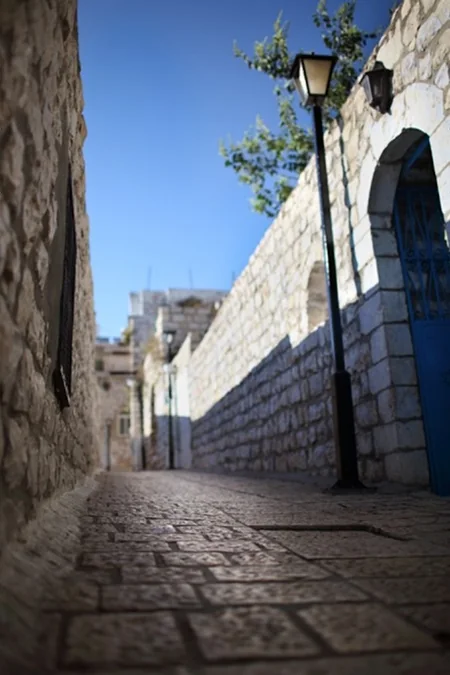
Safed is one of the places where the novel moves closest to the boundary between documented history, religious tradition and legend.
Baba Sali and the Ari
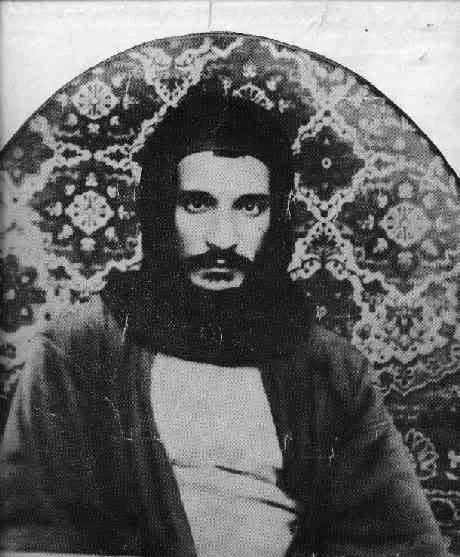
Rabbi Yisrael Abuchatzeirah (1890–1984), widely known as Baba Sali, was a Moroccan rabbi, Talmudic scholar and kabbalist who later became a major religious figure in Israel. The older mystical tradition relevant to the novel centres on sixteenth-century Safed and Isaac Luria — the Ari — whose teachings were transmitted especially through his disciple Chaim Vital.
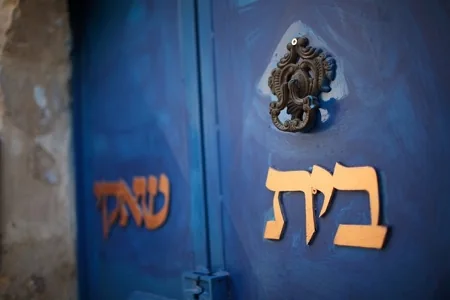
A tradition associated with Baba Sali tells of his visit to Safed in 1921 and his entry into a room in the Ari Sephardi synagogue that local people had regarded as dangerous and kept closed. In the story, Baba Sali enters, prays there and the room can subsequently be reopened.
Why this story mattered
The episode was useful not because the novel treats a devotional story as verified historical fact, but because it captures something essential about Safed: a place where historical people, sacred geography and stories of supernatural presence remain tightly interwoven.
That atmosphere became part of the fictional history of the tablet. The novel uses the traditions surrounding Safed while leaving the reader free to decide where belief ends and explanation begins.
E. Alfasi and Y. Torgeman, Baba Sali: Our Holy Teacher — His Life, Piety, Teachings and Miracles (Judaica Press, 2011).